Types of propolis by geographical origin – which one to choose for production?
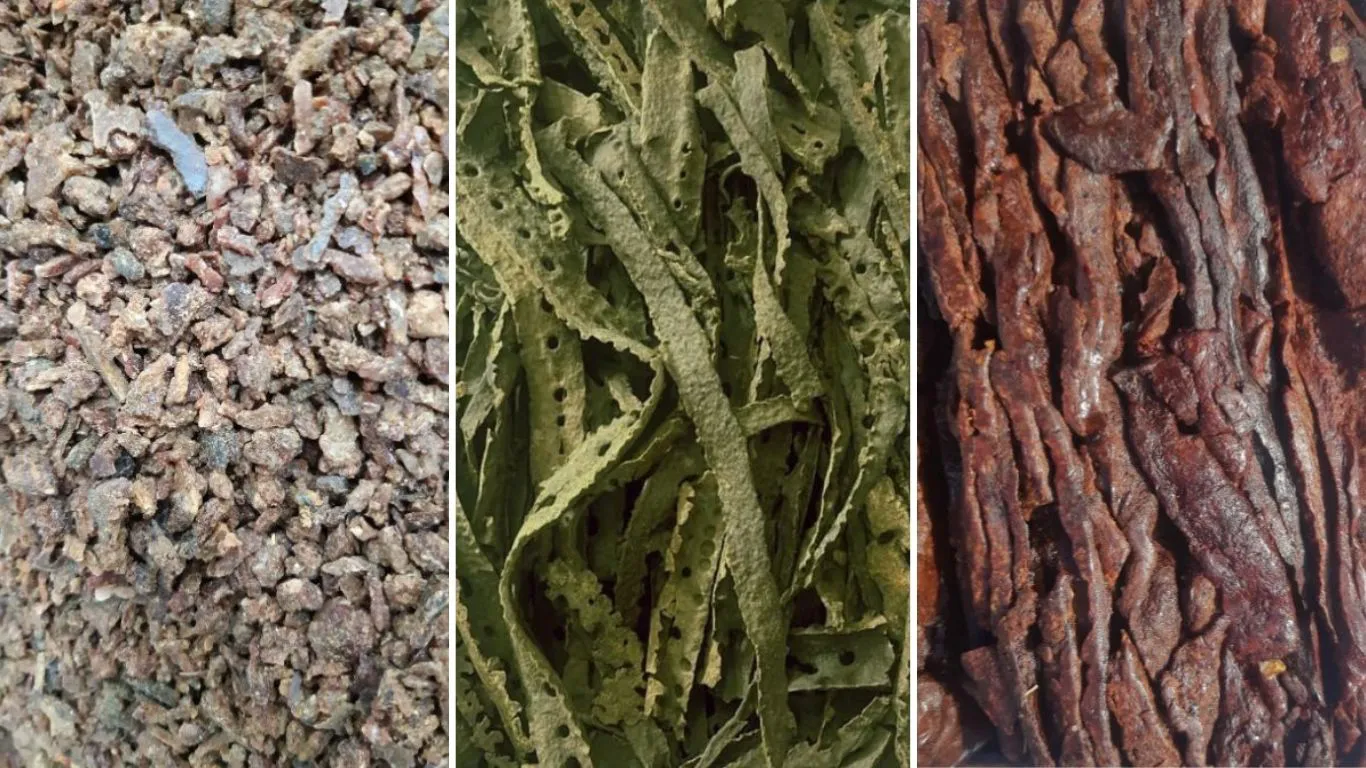
In the propolis trade, a simple division is very often used: Polish propolis, Brazilian propolis, Argentinian propolis, Uruguayan propolis. For a processor, however, that is not enough. The way a raw material behaves during extraction and formulation depends far more on its actual botanical origin and plant zone than on the national border alone. That is why a meaningful classification should not be based solely on country of origin, but on real raw material types.
Contents
- European-type brown propolis – the reference point for most processors
- Brazilian green propolis – when a specific type is needed, not just “propolis from Brazil”
- Brazilian red propolis – a premium, exclusive and clearly more expensive raw material
- Brown propolis from Argentina and Uruguay – a cheaper alternative, but one that requires greater caution
- Which type of propolis should you choose?
- Summary
- FAQ
The most important practical consequence is that raw materials from the same country may sometimes have completely different characteristics and in fact be entirely different products, as is the case with Brazilian green propolis and Brazilian red propolis. In other cases, propolis from different Central European countries may show no noticeable differences. For production purposes, the main factors are solubility, the profile of resins and phenolic compounds, batch-to-batch consistency, availability, sometimes colour, and whether a given type is bought as a standard processing raw material or rather as an ingredient for a premium product.
European-type brown propolis – the reference point for most processors
For many industrial applications, European-type brown propolis remains the most predictable starting point. This is propolis from the European temperate zone. In the literature, this type is usually described as poplar-type propolis, because its main source is poplar resins, although in practice other trees and shrubs growing in the same zone may also contribute. This type of propolis is widespread across Europe, North America and parts of Asia. Its typical constituents are mainly flavonoids, phenolic acids and their esters. This is the type most buyers have in mind when they simply say “propolis”. In our practice, we do not distinguish it solely by country, but by quality grade and the way the batch is prepared.
The PR/EU1/40 specification covers propolis from EU countries, purchased directly from beekeepers, subjected to a broader range of testing, and with ethanol solubility of at least 55%, meaning a content of substances insoluble in ethanol of no more than 45%. In standardisation, we target approximately 40% insoluble fraction. The material has an attractive appearance and is very well suited to retail packing. In PROKIT’s offer, this grade is listed as a separate commercial item within the European propolis range.
The PR/EU/39 specification also covers propolis from EU countries, purchased directly from beekeepers and subjected to a broader range of testing, but with lower solubility: at least 45%, meaning a content of substances insoluble in ethanol of no more than 55%. In standardisation, we target approximately 50% insoluble substances. This is therefore a typical Class II quality grade under Polish Standard PN-R-78891. Mechanical impurities are visible, which is why we recommend this material for extract production. Its specification is also shown in PROKIT’s current offer as a separate grade.
A separate category is PR/ECZ/42, i.e. propolis from the European climatic zone. It includes not only the European Union, but also neighbouring countries, including Ukraine and Turkey. We purchase this raw material in mixed wholesale lots. Here, the scope of testing is narrower and focuses mainly on solubility, which usually falls within the 45–55% range. As a result, this material is cheaper while still available in large volumes. In PROKIT’s current offer, this group is also separated commercially.
One point is worth stressing: Polish propolis is not a separate technological type. It is a specific case within European propolis. At the same time, many buyers in Poland expect raw material of exclusively domestic origin, so on request we also prepare 100% Polish lots. In practice, the vast majority of propolis we sell in the PR/EU1/40 and PR/EU/39 grades is in fact Polish propolis, but it still belongs to the broader European propolis family.
For processors, this means that when assessing European propolis, it is worth looking not only at the declared country of origin, but above all at the quality grade, solubility, sourcing model and scope of testing carried out. These are the factors that actually determine process predictability.
Brazilian green propolis – when a specific type is needed, not just “propolis from Brazil”
Brazilian green propolis is not simply an exotic counterpart of European propolis. It is a distinct botanical type, associated primarily with the plant Baccharis dracunculifolia. In both the literature and the trade, this type is distinguished precisely because it has a different chemical profile from temperate-zone propolis. The raw material has a greenish-brown or olive colour, the extract shows green tones, the smell is sharp and characteristic, and its characteristic biochemical marker is artepillin C, which in PROKIT’s quality specification is set at a minimum of 3.5%.
From a practical point of view, green propolis is worth choosing when what matters is not just “propolis itself”, but a specific commercial and analytical marker, namely artepillin C, together with the characteristic profile of Brazilian raw material. The literature describes green propolis as rich in prenylated phenylpropanoids, and some sources list, in addition to artepillin C, baccharin, drupanin, caffeic acid and p-coumaric acid. This is already a completely different profile from the classic poplar type.
It is a good choice for products where Brazilian origin, a recognisable chemical profile and the ability to refer to specific raw material markers are important. It should not, however, be treated as a simple substitute for European propolis. It gives a different extract, a different colour and different expectations on the market side. It is not “the same thing, just from another country”, but a separate raw material category.
Brazilian red propolis – a premium, exclusive and clearly more expensive raw material
An even more clearly distinct type is Brazilian red propolis. PROKIT identifies its botanical origin as Dalbergia ecastaphyllum, with a red to reddish-brown raw material colour and a red ethanol extract. The literature confirms that Brazilian red propolis is associated with the resins of this plant and differs from green propolis not only in colour, but also in the classes of compounds dominant in its composition. Its most characteristic compounds include isoflavonoids and pterocarpans, and the markers most often mentioned are vestitol, neovestitol, medicarpin, formononetin and biochanin A.
From the processor’s point of view, three things matter most here. First, this raw material is clearly more expensive than standard brown propolis types. In PROKIT’s current offer, Brazilian red propolis is priced substantially higher than European propolis, which clearly shows that this is not an everyday-use raw material, but one for more selective applications.
Second, its higher price is not accidental. Studies and review papers indicate that Brazilian red propolis is associated exclusively with a specific area of north-eastern Brazil, especially the coast and mangrove zones of the state of Alagoas. It is precisely this limited scale and unique harvesting area, combined with its distinctive biochemical composition, that explains its market position.
Third, this is a raw material for exclusive, premium products aimed at connoisseurs, rather than the optimal choice where formulation cost is the main criterion. If the goal is to create a truly distinctive product, red propolis has a strong justification. If, however, someone is simply looking for propolis for a classic extract, it will usually be too expensive a choice.
Brown propolis from Argentina and Uruguay – a cheaper alternative, but one that requires greater caution
Among South American brown propolis types, it makes sense to think separately about Argentina and Uruguay, but from a practical point of view it is convenient to discuss them together. Both origins may be attractive to processors looking for raw material cheaper than classic European propolis, yet in both cases the assessment of the actual batch matters more than the country name itself.
Argentina is a very large country with a strong north–south spread, and therefore includes several climatic zones and different plant communities. This has a real impact on propolis. Reviews devoted to Argentinian propolis emphasise its high diversity and indicate that several types of this raw material have been identified there. In practice, this means that Argentinian propolis is not one uniform technological profile.
In trade, Argentinian brown propolis is sometimes one of the cheaper versions of brown propolis, which is why some processors use it as a more economical substitute for European propolis. This can be a justified strategy, because good batches can be very similar in quality to European propolis and perform well in similar applications. At the same time, this should not be assumed automatically without assessing the batch.
The situation in Uruguay is somewhat different. The literature indicates that possible plant sources of Uruguayan propolis include eucalyptus, poplar, birch and willow, and the composition of isolated compounds shows similarities to European and Chinese propolis. This explains why it is sometimes regarded as a South American brown propolis relatively close to the European type.
In our experience, however, Uruguayan propolis can cause more technological difficulties than its botanical similarity alone would suggest. Some lots dissolve poorly in 70% ethanol and work better only when 95% ethanol is used. It also happens that different resin phases separate during extract concentration, which makes it more difficult to obtain a homogeneous semi-finished product.
For that reason, for both Argentinian and Uruguayan propolis, we would not recommend purchasing purely on the basis of a general origin label. These raw materials can be very useful from a cost point of view, and sometimes also very good in quality terms, but they require an earlier technical trial.
Which type of propolis should you choose?
If you need a classic, predictable raw material for standard extracts, capsules, food formulations or cosmetic formulations, the safest starting point is European-type brown propolis.
If Brazilian origin, a specific raw material identity and a chemical marker matter, Brazilian green propolis is worth considering.
If the goal is a luxury, premium product based on a rare raw material, the right candidate will be Brazilian red propolis. However, its clearly higher raw material cost must be accepted.
If cost is the priority, brown propolis from Argentina or Uruguay may be considered.
Summary
A division of propolis by geographical origin only makes sense if it reflects real differences in the raw material. For processors, the important things are not the country name itself, but the botanical type, ethanol solubility, scope of testing, batch consistency and behaviour during processing. That is why Polish propolis, and European propolis more broadly, should be treated as one technological family; green and red Brazilian propolis as two separate specialist types; and brown propolis from Argentina and Uruguay as interesting lower-cost alternatives to European propolis, but ones that require more cautious batch assessment.
FAQ
Is Polish propolis a separate type of propolis?
Not in technological terms. It is a specific case within European propolis.
Is Ukrainian propolis different from Polish propolis?
Technologically and biochemically, no.
Is Turkish propolis different from Polish propolis?
The difference is small and not technologically significant. It is still brown poplar-type propolis.
Can Argentinian propolis replace European propolis?
Usually yes, but not in every case. It is worth buying a trial lot first and testing it for your intended use. The smell and shade may differ.
Is green propolis really green?
It is not a grass-like green. It is rather a green shade of brown. On a fresh break, the green is more visible. The tincture has a colour similar to green tea. However, its sharp smell, taste and overall appearance make it unmistakable.
Is red propolis really a premium product?
Yes. This results from both its biochemical composition and limited harvesting area, as well as from its clearly higher price level in trade.
Is Uruguayan propolis suitable for extraction?
Yes, but it requires technological caution. Some lots work better in 95% ethanol than in 70%.